
It is early on a Monday morning and your team is ready to hit the road to perform a variety of tasks. You see a long queue at the coffee machine, people quickly checking their route and a colleague desperately searching for his lost tablet. The chaos is complete when it turns out that three employees are scheduled at the same location, while on the other side of town no team member is available to pick up an urgent job.
We may act a little funny about it now, but these situations are more common than we care to admit. Especially in companies with a lot of off-site jobs. The result? Lost time, frustration with clients as well as with your team, and ultimately missed opportunities. But don't worry, there is a solution: clear insight into your team's capacity. And it is easier than you think.
What is capacity planning?
Capacity planning is the tool your company uses to optimally deploy your team, machines and other resources to meet your customers' demands. Clear insight into your team's capacity is the recipe for a perfect working day. With good capacity planning, your colleagues always know what they need to do at that location and how long it will take. This allows you to plan ahead much better in the long term and switch faster in acute situations.
Why is good capacity planning so important?
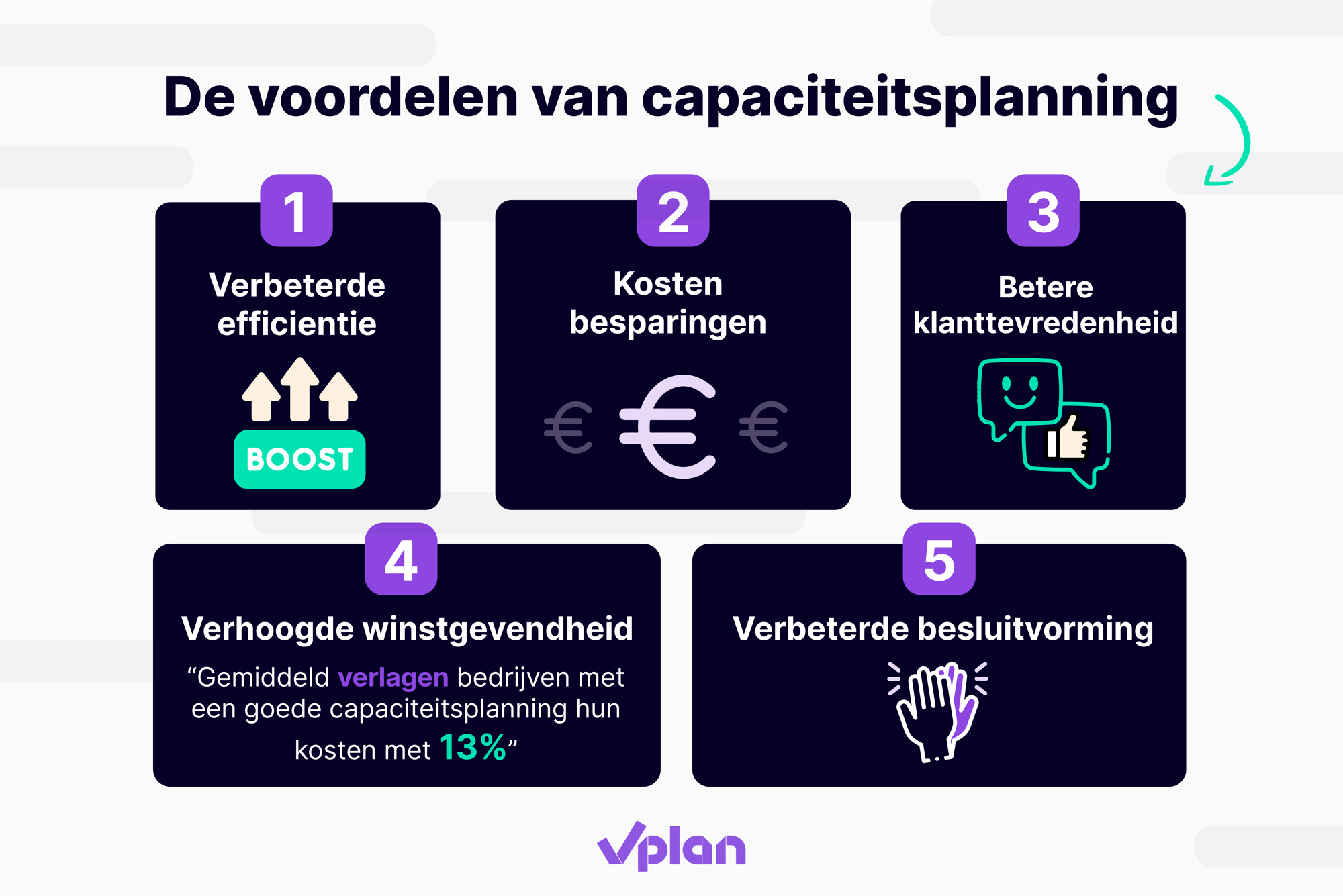
For any company, big or small, capacity planning makes all the difference. It allows you to plan ahead, save costs and keep your customers happy by always being on time.
Benefits of good capacity planning
- Less stress and a lower workload
When your team knows what is expected of them and which tasks are prioritised, it creates a calm and structured working environment. You know whether there is sufficient capacity and the right skills or resources to meet the schedule. But you also see bottlenecks: whether resources/people are short. In addition, you see when there is excess capacity and whether you can scale down or take on additional assignments.
Example: You have won a large order that has to be completed next week. Thanks to clear capacity planning, everyone knows exactly what they need to do and there are no unexpected surprises. This allows the team to concentrate on their tasks without stress. - Improved efficiency
Yet another benefit of good capacity planning is less wasted time due to double appointments or unnecessary trips. Your team works more efficiently and can get more work done in less time.
Example: Two employees are scheduled for different assignments near each other. By combining the assignments, you can save time and fuel, thus increasing productivity and efficiency. Saving money
Effective use of resources means less waste and lower costs. By knowing exactly which resources are needed when, you can avoid unnecessary spending and increase the profitability of your business.
Example: By having a clear understanding of your inventory and staff capacity, you can avoid buying too many products or scheduling too many staff. This helps to control and optimise your operating costs.
Satisfied customers
Good capacity planning enables you to always be ready to serve your customers with fast and reliable service. This increases customer satisfaction and helps build long-term customer relationships.
Example: A customer calls with an urgent order. Thanks to your clear schedule, you can immediately see which employee is available and you can schedule the job quickly. The customer is impressed by your quick response and is likely to choose your company again in the future.
Improved decision-making
Capacity planning gives you a clear overview of your resources and helps you make more informed decisions. You can react proactively to changes in the market and adjust your operations accordingly.
Example: By regularly analysing your capacity planning, you see trends and patterns that help you make strategic decisions. For example, you notice that there is more demand for specific services in certain months, allowing you to adjust your staffing accordingly.
Increased profitability
By planning resources effectively, you can reduce costs and increase productivity. This leads to improved profitability for your business.
Example: By optimising your capacity planning, you can take on more orders without hiring additional staff. This increases your sales and profits without significantly increasing your costs.
Consistent quality
Structured capacity planning ensures that you always have the right resources available to meet customer demand, enabling you to deliver consistently high quality.
Example: You always have the right quantity and quality of materials and personnel available to carry out every job with the same high standard. This ensures that your customers are always satisfied with the end result.
How do you gain insight into your capacity?
Gaining insight into your team's capacity in order to create a well-organised schedule can sometimes be tricky. Consider the fact that, as a planner, sometimes you simply don't have enough information to plan properly. Also, sometimes a mistake can be made (after all, we are all human) or there is not enough flexibility in the planning to respond to unexpected changes.
In most cases, companies know very well what the supply and demand is. They use Excel to create an overview of their capacity planning, but then, when shifts have to be made due to an urgent order or a leave appointment, the overview is soon lost. They lack flexibility in planning.
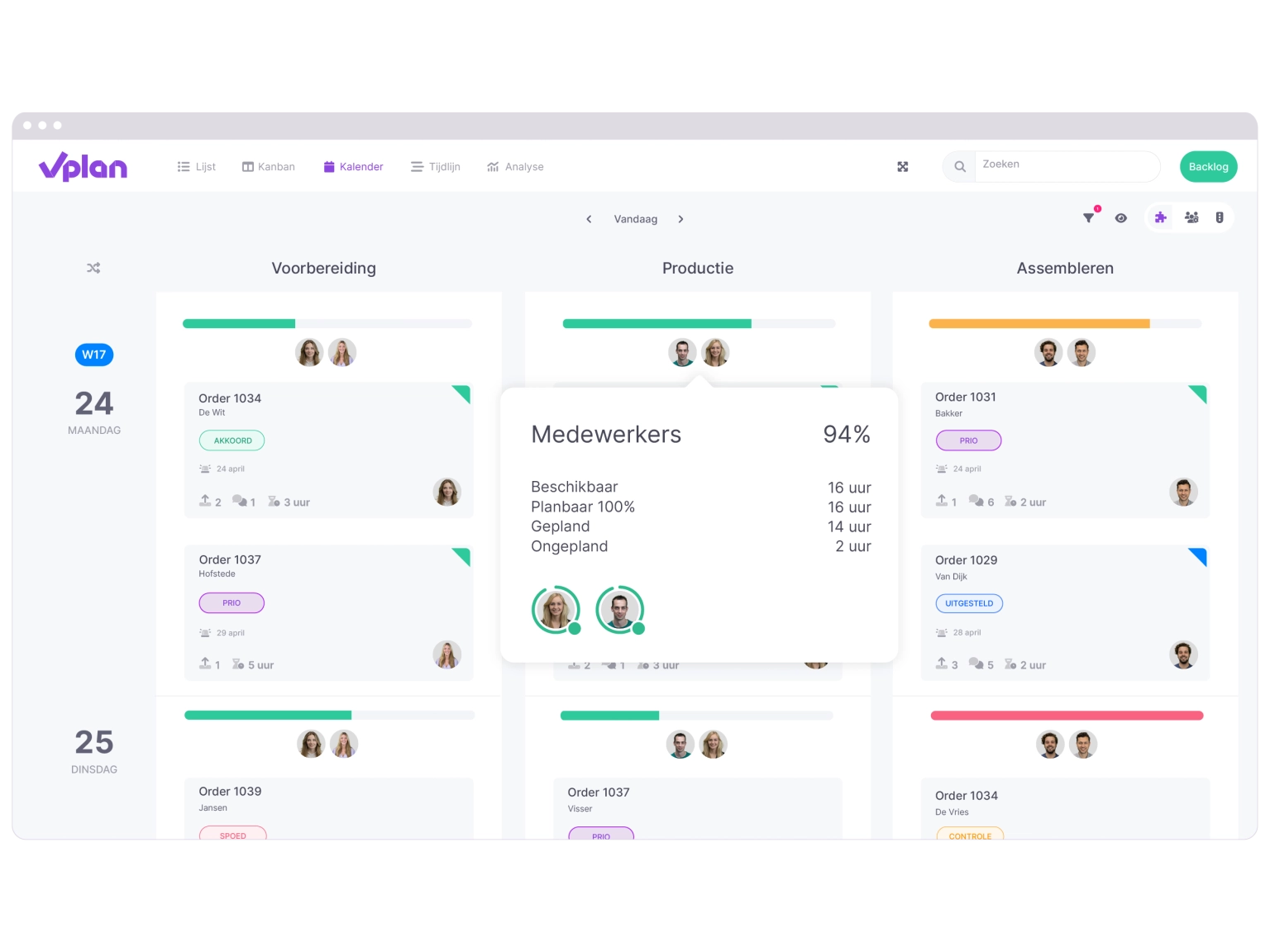
With vPlan, you get in-depth insight into your team's capacity. Our software offers an intuitive visual planning where you can see at a glance who is working on what and when. This allows you to easily assign tasks based on availability and skills, and receive real-time updates on task progress.
Capacity planning in vPlan
How to create clear capacity planning in vPlan? It's quite simple. Basically, you go through four steps:
- View the backlog of your projects
The first thing you need to do is make an overview of all upcoming projects. In vPlan, you can easily put all upcoming projects in the backlog. And if you have linked vPlan with your ERP system, new projects automatically end up in the backlog. Next, you map out the required capacity. How many hours or FTE do you need to complete these projects? With vPlan, you can easily get a visual representation of your projects, allowing you to see at a glance what is on the schedule. - Determine available capacity
The next step is to look at your current capacity. This can be done at company level, per team, and per employee. Is the current capacity sufficient to carry out all planned projects? Or maybe you need to hire additional employees or freelancers? With vPlan, you get a clear picture of available capacity and can immediately see where there are shortages. Define tasks, subtasks, order and priorities
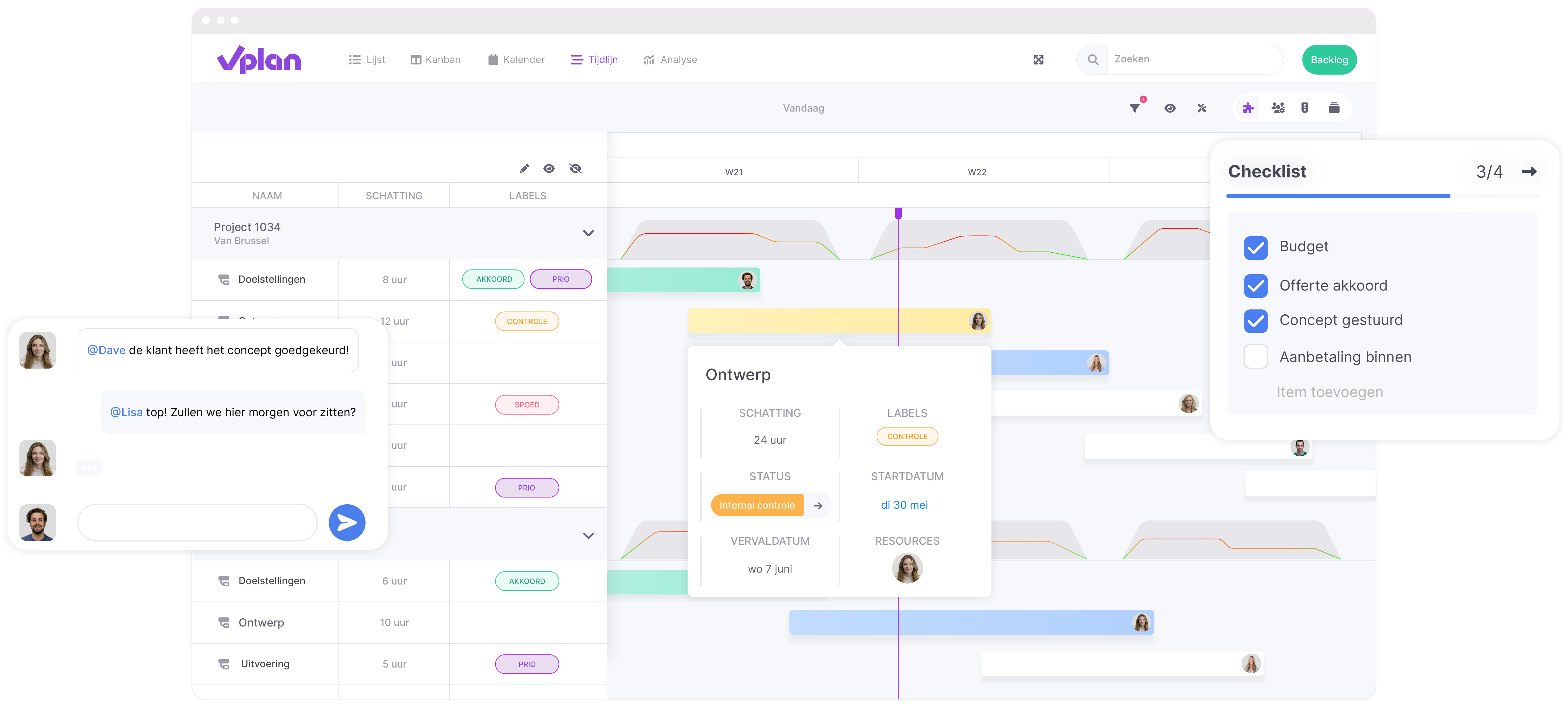
Once you have a good idea of your projects and available capacity, it is time to determine the tasks, subtasks and their order. What are the key milestones for each project? Which tasks have priority and should be done first? In vPlan, you can easily organise, prioritise tasks and set deadlines, so you always know what needs to be done, when and by whom.
Allocate tasks to resources
The last step is to assign tasks to specific teams and employees. How do you divide tasks among your teams and who is responsible for which subtask? Use vPlan to set deadlines and assign tasks to your employees. This way, everyone knows exactly what is expected of them and when it has to be finished.
Not using vPlan yet? Then try it out for free!

Work at vPlan
We are looking for new colleagues.