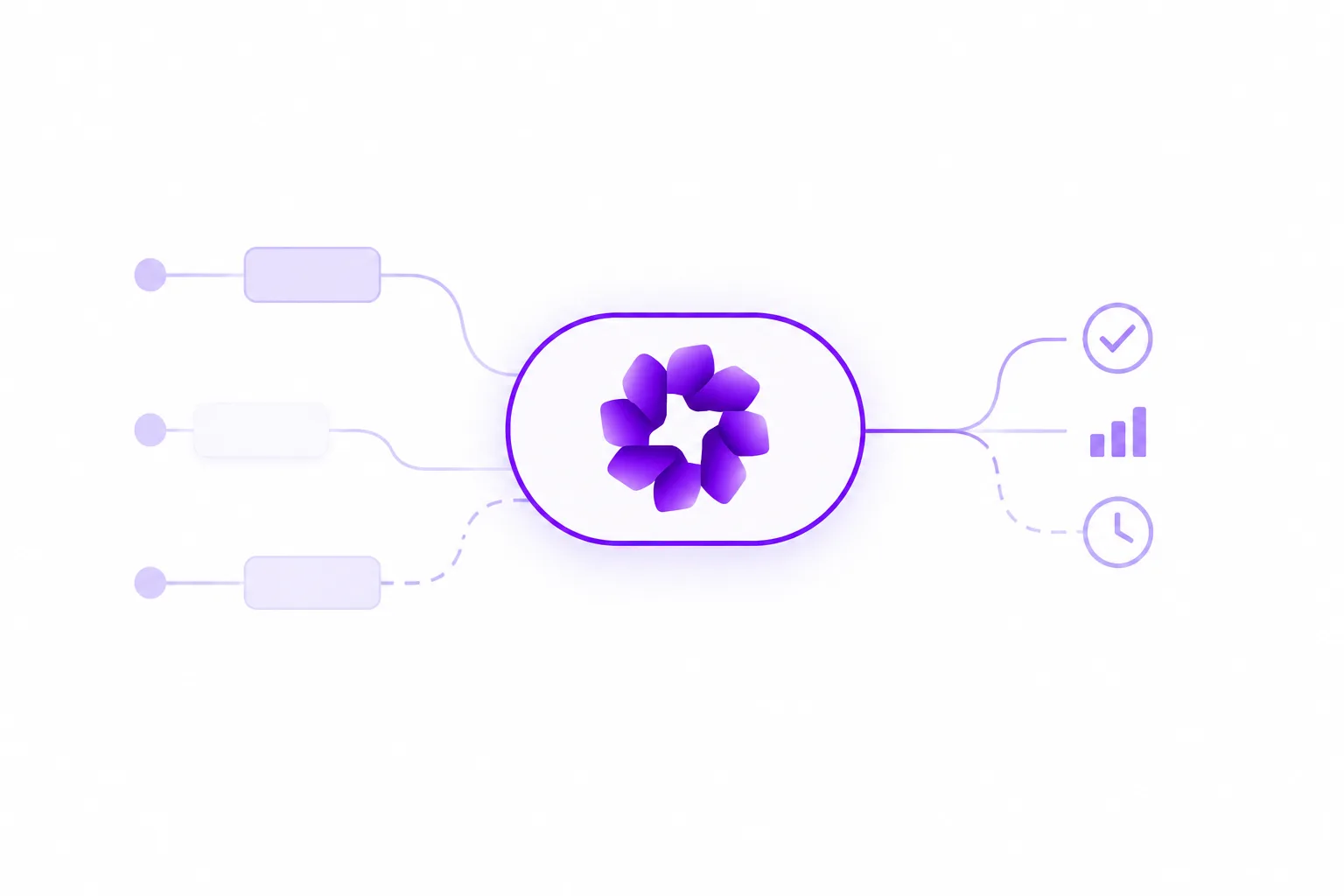
The real question, then, is not whether you use AI, but where it genuinely helps your team work smarter. Especially in planning and operations, where visibility and control make a difference every day.
That’s why, in this blog, we’ll explore the biggest misconceptions about AI in planning and, more importantly, take a closer look at where the real opportunities lie.
Misconception #1: AI Automatically Makes Us More Efficient
Many organisations secretly hope for a silver bullet.
"If we implement AI, we’ll automatically become more efficient."
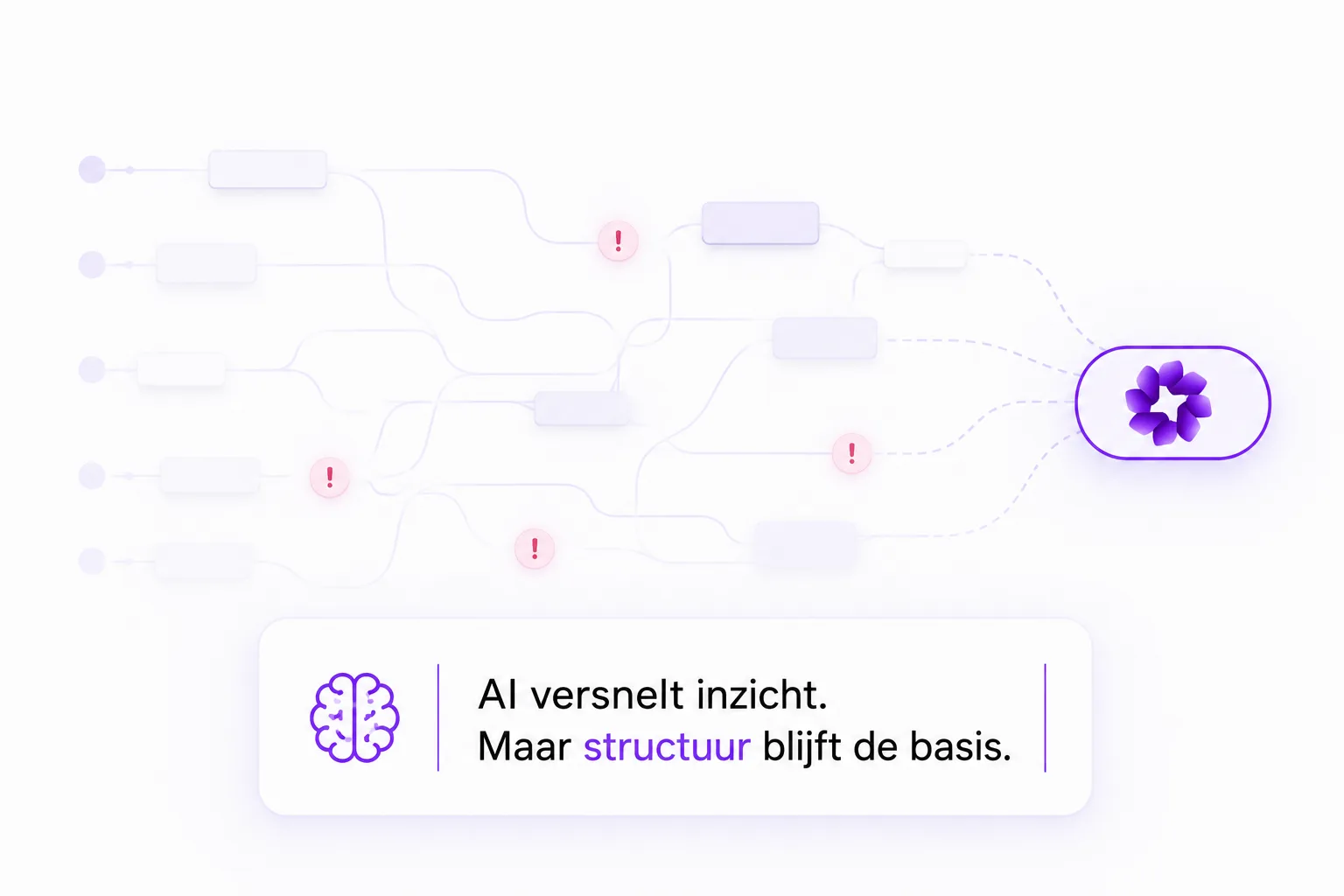
But AI is not a magical layer that fixes chaos. In fact, when processes are unclear, data is fragmented and teams work in silos, AI often makes those problems even more visible.
Garbage in = garbage out.
The real value only emerges when planning, capacity, communication and progress come together in one place. That’s when AI can identify patterns and connections that are difficult for people to spot.
For example:
- Where recurring overload occurs
- Which projects are causing delays
- Which employees still have available capacity
- Which tasks keep being pushed back
- Where bottlenecks are likely to emerge before they escalate
These insights are not “smart” simply because AI provides them. They are valuable because the organisation finally has control over its operations.
Misconception #2: AI Should Do Everything Automatically
Many AI tools aim to become fully autonomous. They make decisions independently, execute processes and initiate actions without human intervention.
It sounds impressive.
Until something goes wrong.
In operational processes, however, transparency and control are exactly what you want to maintain. Especially when planning has a direct impact on customers, production, deadlines or capacity.
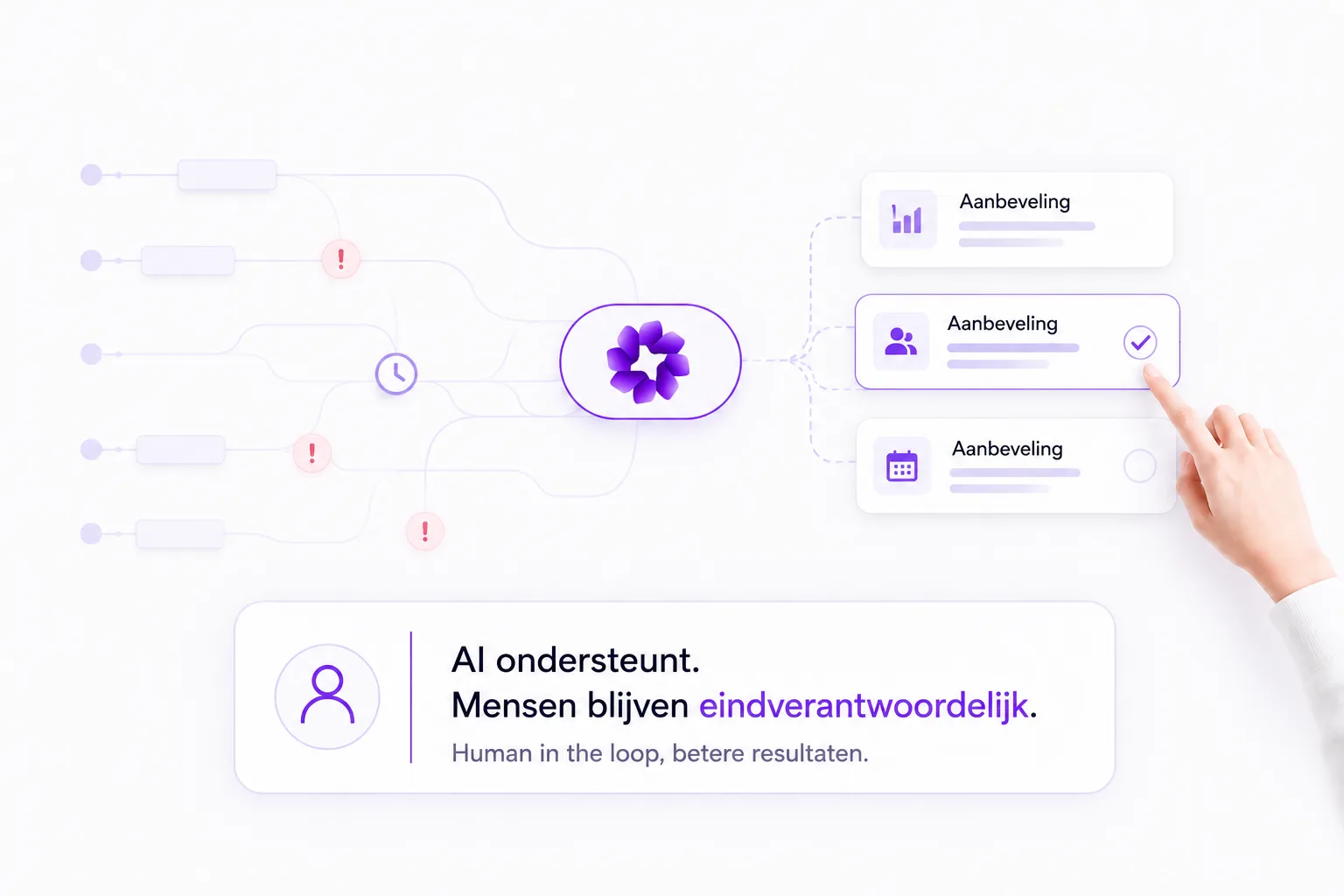
That is why more and more organisations believe in human-in-the-loop AI: AI that supports people, while humans remain ultimately responsible. Research shows that this collaboration between people and AI often delivers better results than full automation alone.
At vPlan AI, that principle is at the core of everything we do.
Byte can, for example:
- Identify capacity issues
- Detect delays
- Summarise information
- Provide intelligent recommendations
- Analyse patterns
But ultimately, the user decides what happens.
No black box. No AI that “just makes decisions”.
Simply intelligent support for the people who manage planning every day.
Misconception #3: AI Is Mainly About ChatGPT-Style Conversations
When people think of AI, they often think of chatbots.
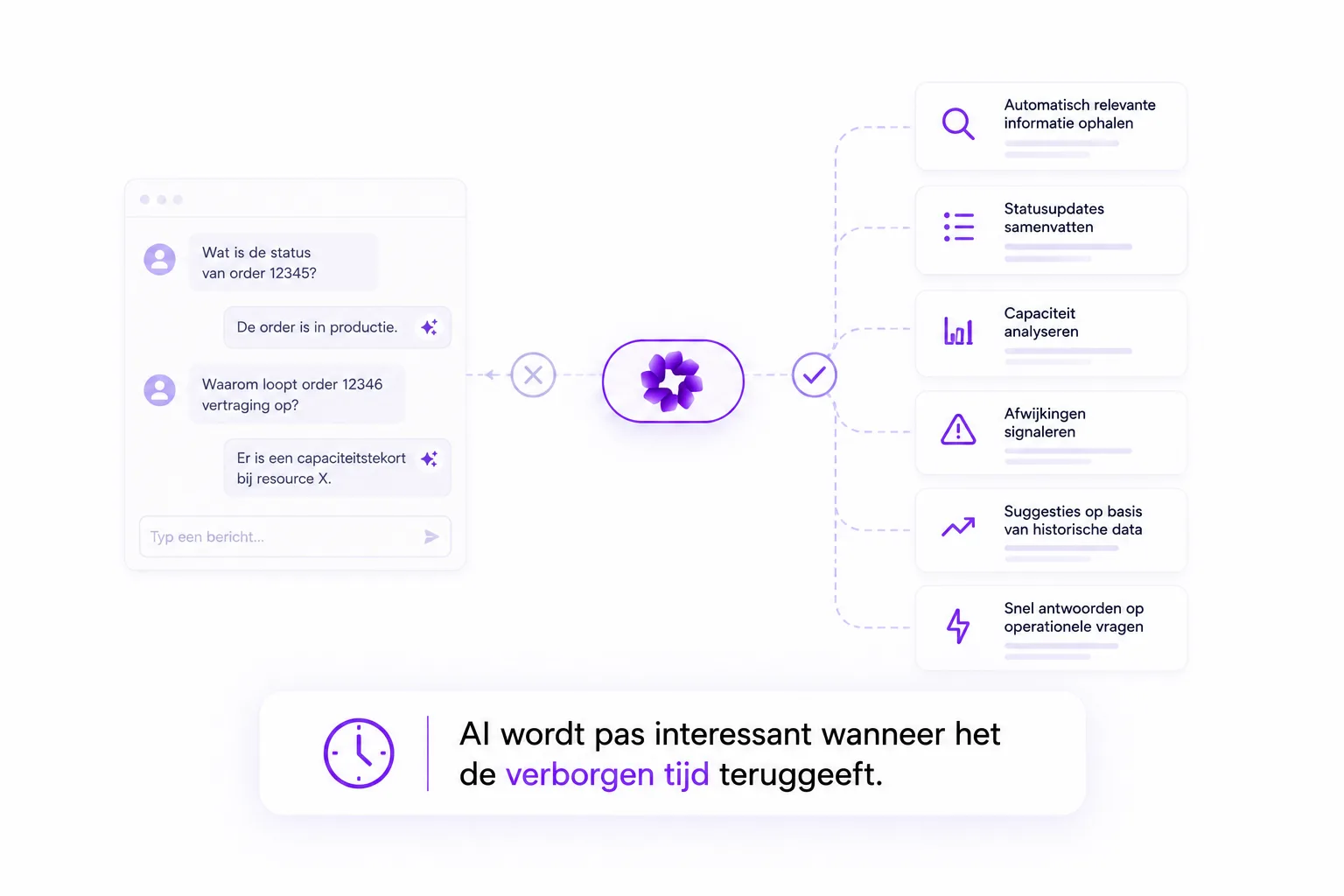
But the real impact of AI in planning has very little to do with “talking to a system”. It comes from saving time on small, everyday tasks.
Think about:
- Automatically retrieving relevant information
- Summarising status updates
- Analysing capacity
- Identifying deviations
- Making recommendations based on historical data
- Getting quick answers to operational questions
Not particularly spectacular, but incredibly valuable.
Because in planning, teams lose hours every day searching for information, switching between systems, coordinating with colleagues and checking progress.
Misconception #4: AI Is Only Relevant for Large Companies
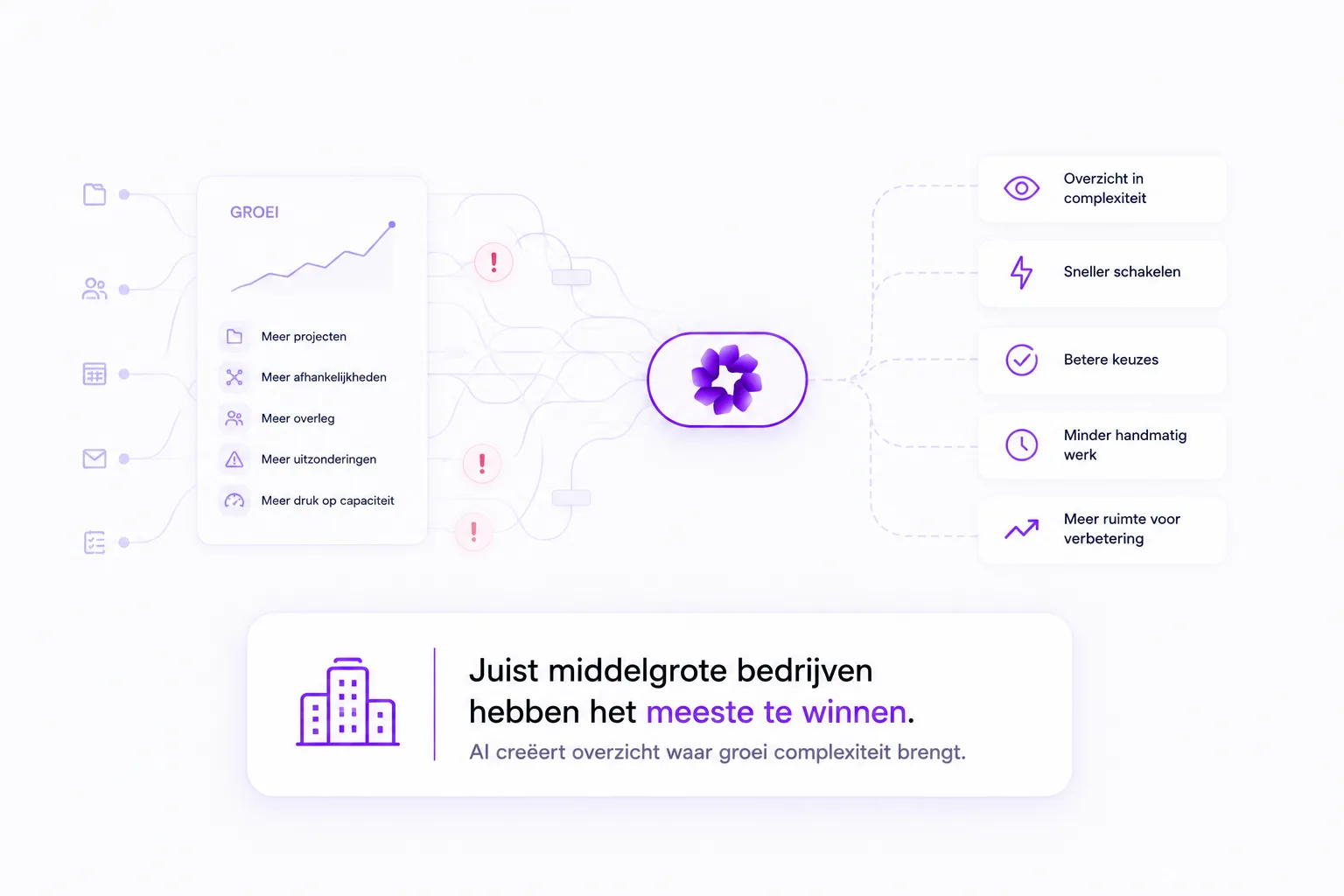
This is another persistent myth. In reality, mid-sized businesses often have the most to gain. Why? Because growth usually brings additional complexity:
- More projects
- More dependencies
- More meetings and coordination
- More exceptions
- More pressure on capacity
And this often happens while teams are still working with Excel, disconnected tools or manual handovers. At that point, people spend more time simply keeping the planning running than improving it.
That’s exactly where AI can help.
Not by taking over everything.
But by creating visibility more quickly as complexity continues to grow.
Don't start with AI. Start with your biggest frustration.
The organisations that will get the most value from AI in the future are probably not the ones with the most tools.
They are the organisations that best understand:
- Where time is being lost
- Where processes are getting stuck
- Where communication breaks down
- Where capacity is being used inefficiently
- Where teams are still spending unnecessary time on manual tasks
That’s where the real gains begin.
Not with the question: “How can we use AI?”
But with: “Where are we unnecessarily losing time, visibility or control today?”
Perhaps the opportunity lies in:
- Smarter planning
- Finding information more quickly
- Better insight into capacity
- Less time spent coordinating
- Identifying delays earlier
And perhaps you’ll discover something surprising when you let AI take a critical look at your processes. Sometimes, you only realise how much complexity has quietly built up when a system reveals patterns that are difficult for people to see.
AI Should Make Work More Human, Not More Complicated
Perhaps that is the most important lesson in today’s AI discussions. The best technology actually fades into the background.
You don’t notice it because it’s “AI”.
You notice it because work runs more smoothly.
Because you gain insights more quickly.
Because you spend less time searching.
Because teams collaborate more effectively.
Because planners experience less stress.
That is also how we view vPlan AI.
Not as a hype-driven technology, but as a practical assistant for teams that keep operations running every day.
And honestly?
We find that far more interesting than all the AI hype put together.
Want to learn more about vPlan AI?
Discover how Byte helps teams plan more intelligently, gain insights faster and collaborate more productively: Explore vPlan AI.

Work at vPlan
We are looking for new colleagues.