Planning determines more than we think
Planning is one of the most underestimated disciplines within organisations. Not because it is unimportant, but precisely because it runs through everything. Whether you work in healthcare or in a production environment, ultimately your planning determines how effectively your organisation functions. In many organisations, planning determines the outcome, yet it rarely receives that level of attention.
Precisely because planning is so decisive, you see something striking in practice. Many planners still work daily with systems and methods that were not designed for today’s complexity. A schedule that works on Monday, but already needs adjusting on Tuesday due to illness or last-minute changes. Decisions that are made under time pressure, without full insight into the consequences later in the week.
Planning 1.0: manual, reactive and fragmented
This is what you could call planning 1.0: manual, reactive and highly dependent on individual knowledge. And despite all technological developments, a surprising number of organisations are still here. Not because they want to be, but because change is often more complex than it seems. Excel works “well enough”, processes are ingrained, and knowledge sits in people’s heads.
What is often overlooked is that planning and execution are disconnected at this stage. The planning is created somewhere, but execution lives in other channels. Think of separate job sheets, WhatsApp messages, emails or verbal handovers. Information becomes fragmented, changes do not reach everyone at the same time, and visibility disappears as soon as the work begins. As long as complexity remains limited, this may seem manageable. But as soon as pressure increases, it becomes clear how fragile this way of working actually is. Errors occur, alignment breaks down, and it becomes evident that this way of planning is not scalable. Organisations that continue to treat planning as an administrative process will structurally fall behind.
Planning 2.0: from separate tools to one unified system
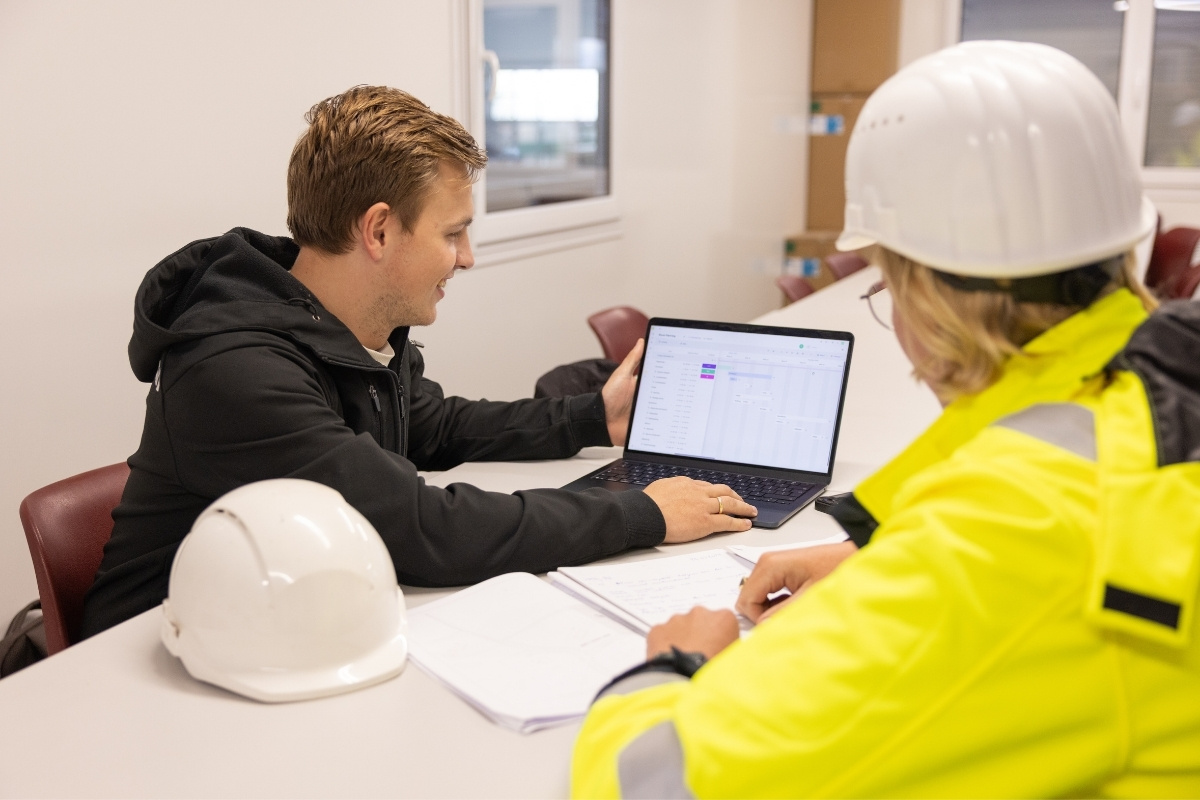
This is where the step towards planning 2.0 begins. For many organisations, working with tooling that brings structure, visibility and cohesion is not a given, but it is the greatest opportunity to regain control. No longer separate lists and fragmented communication, but one central place where planning and execution come together. No longer manual adjustments without full visibility, but working with insight into availability, schedules and dependencies. Solutions such as vPlan help organisations take this step, not by reinventing planning, but by organising it better and making it more reliable.
In practice, this also means that planning in a 2.0 situation no longer stands on its own, but becomes part of a broader whole. Through integrations with systems that organisations already use, such as ERP, HR systems and accounting software, a single, coherent view emerges. Availability, contract hours, costs and capacity come together, meaning planners are no longer dependent on fragmented sources or manual work. Instead of collecting and checking information, the focus shifts to making better decisions.
For organisations that take this step, something noticeably changes in how planning is experienced. The process becomes calmer, more predictable and less prone to errors. Changes can be implemented more quickly and their impact is immediately visible. Planning therefore becomes not only executable, but also manageable.
At the same time, this is where the limitation of 2.0 becomes visible. It makes planning more efficient, but does not yet address the core of the problem. Most systems help you create visibility and work faster, but still leave the core of the work with the planner. If someone is absent, you still have to determine the best solution. If multiple scenarios are possible, you still have to assess which is the most logical. The tooling supports you, but does not yet truly think along with you.
Planning 3.0: from supporting to thinking along and acting
And it is precisely here that it becomes clear that the next step is no longer an optimisation, but a fundamental change in how planning works.
What we often see is that planning is still approached as a tool in which you work. In reality, it is the place where daily decisions are made that directly influence the execution of work. Availability of people, dependencies between tasks and organisational priorities all come together here. Planning is therefore not just a representation of work, but the point at which work is actively steered.
Because all these decisions come together here, it is also the place where technology can have the greatest impact. Until now, that responsibility has fully rested with the planner. What AI changes is that this decision-making layer itself becomes more intelligent.
Initially, by providing better insight. Not only into what is planned, but especially into what is likely to happen. Capacity issues, risks and dependencies become visible in a way that was previously difficult to oversee. Then you see systems take a step further and actively think along. Not by showing analyses afterwards, but by proposing alternatives at the moment decisions are made, taking into account impact, priorities and available capacity.
The next step in this development is that systems also begin to act within clearly defined boundaries. Small optimisations, resolving conflicts or adjusting plans can increasingly be carried out automatically, while the planner retains control over direction and exceptions. The planner therefore shifts from being the one who solves everything to the one who validates decisions and steers where necessary.
The role of the planner is fundamentally changing
Planning therefore shifts from a system in which you work to a system that works with you. Planning shifts from organising to steering.
This creates a fundamental difference. It is not a small step, but a change in how organisations approach planning. Over time, the difference between organisations will therefore lie less in individual planners and more in the quality of the system they use. The best planners of the future are not those who do everything themselves, but those who know where to intervene.
At the same time, many organisations are still in the middle of the transition from 1.0 to 2.0, while this new development is already emerging. This makes it an interesting tipping point. While one organisation is still focused on creating basic visibility and structure, another is already experimenting with systems that actively think along and optimise.
From organising to steering: the next step for vPlan
Within vPlan, we see both phases on a daily basis. Where we once started by better organising planning, we are now building towards a system that not only supports, but increasingly contributes to the quality of decisions and their execution.
With the introduction of vPlan AI and our planning assistant Byte, we are taking the next step. Not as a separate addition, but as an integral part of how planning works and evolves.
The question is not whether planning will become smarter, but when your organisation decides to move along with it.
Want to see what that looks like in practice? Visit vplan.com/en/ai

Work at vPlan
We are looking for new colleagues.